
Search Florida Traffic Court Records
Florida traffic court records are kept by the Clerk of Court in each of the state's 67 counties. Every traffic citation issued here creates a court record you can look up, pay, or contest through the county clerk's office. The Florida Department of Highway Safety and Motor Vehicles tracks all citations and points on your driving record at the state level. You can search for traffic court records online through statewide payment portals, county clerk websites, or by going to a courthouse in person. This page covers how to find, access, and get copies of traffic court records across Florida.
Florida Traffic Court Records Quick Facts
Where to Find Florida Traffic Court Records
The Clerk of Court in each Florida county keeps traffic court records for that area. When a law enforcement officer writes a traffic citation, the record goes to the clerk in the county where the stop took place. The clerk files the case and tracks it from start to finish. You can search for these records at the county clerk office or use online tools. The Florida Department of Highway Safety and Motor Vehicles also keeps a statewide record of all citations and can tell you about points on your license. Call them at 850-617-3000 for general questions about your traffic court record in Florida.
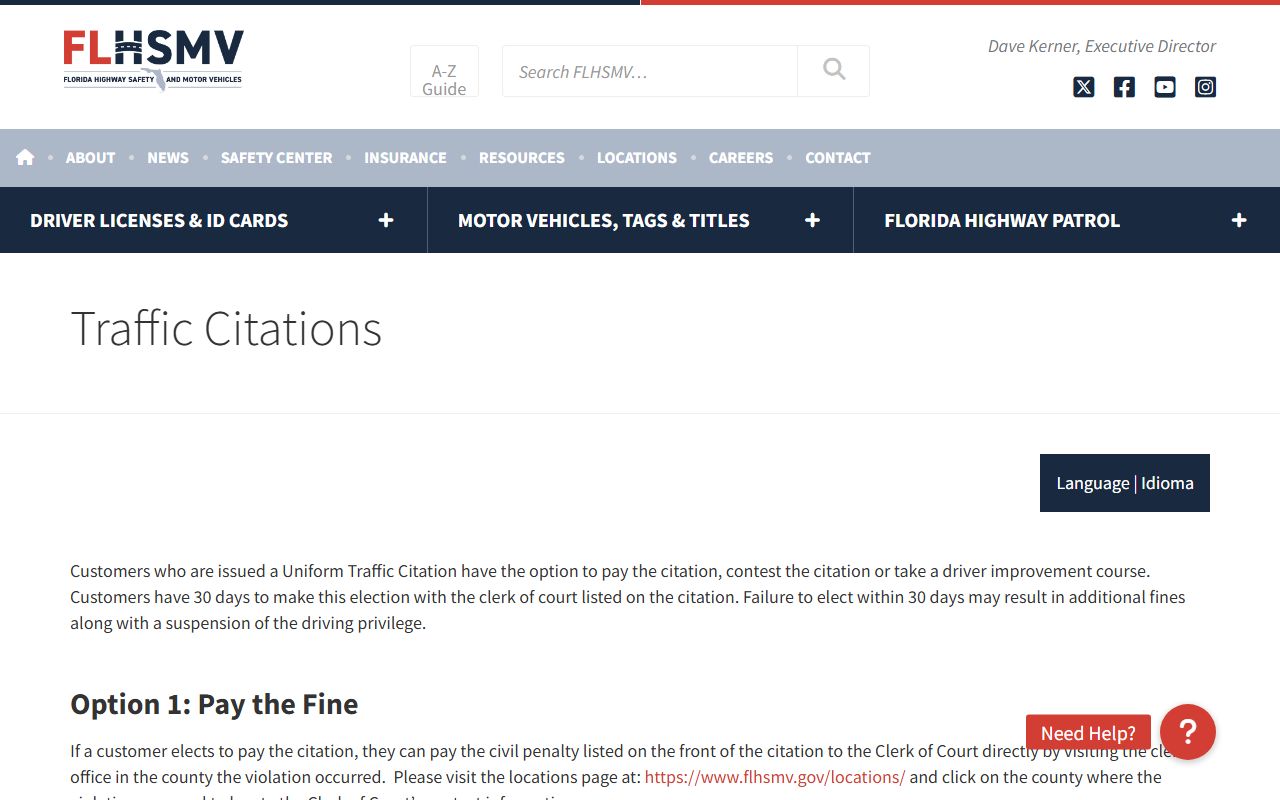
The FLHSMV traffic citations page walks you through every option you have after getting a ticket in Florida.
Florida also has a statewide payment system called PayFLClerk that lets you pay traffic fines for all 67 counties from one site. You look up your citation by number and pay it right there. This is the fastest way to handle a basic traffic ticket in Florida. Not all cases can be paid online, though. Some need a court date. Criminal traffic cases and citations tied to crashes that caused serious injury need a hearing in front of a judge. The clerk's office can tell you which type of traffic court record yours falls under.
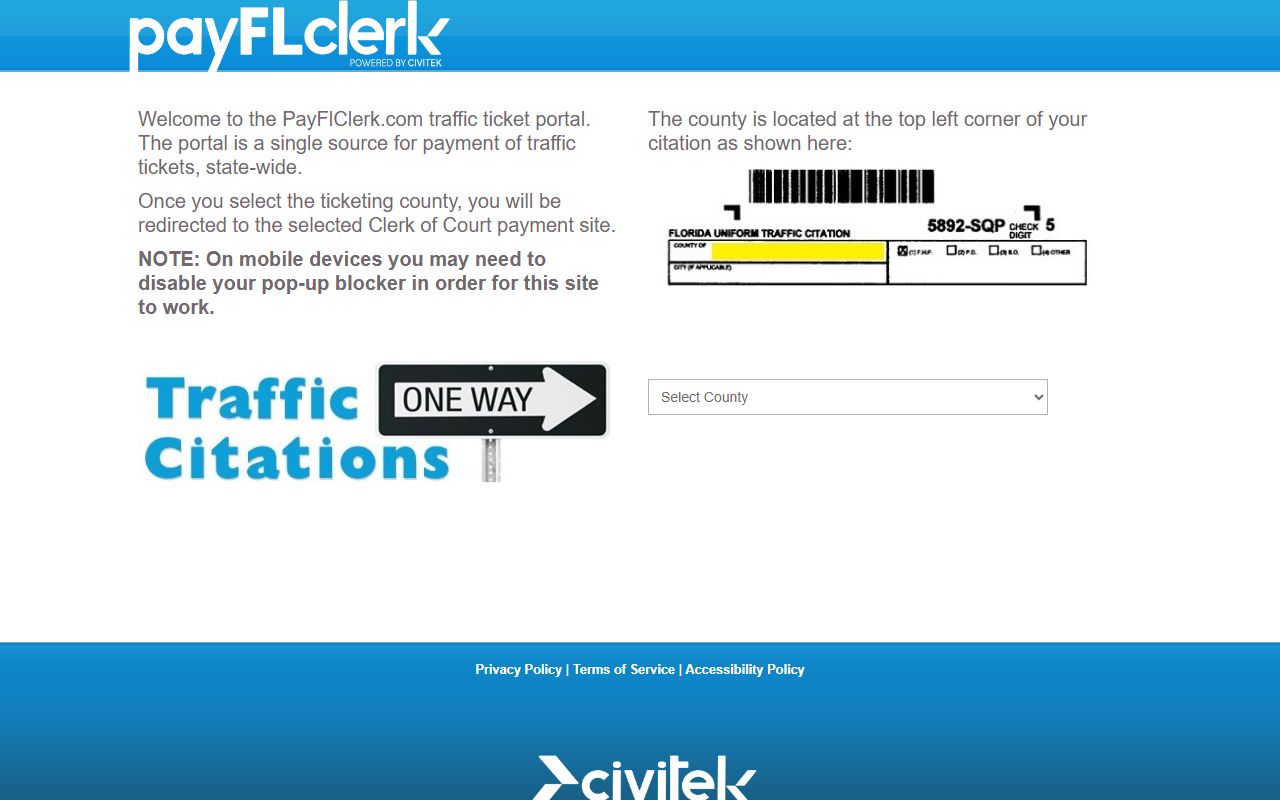
PayFLClerk covers all 67 Florida counties for online traffic fine payments and citation lookups.
The Florida Clerks of Court Operations Corporation supports all 67 Florida clerks. Each clerk holds the position as an ex officio officer of the circuit court and is responsible for traffic court records in their county.
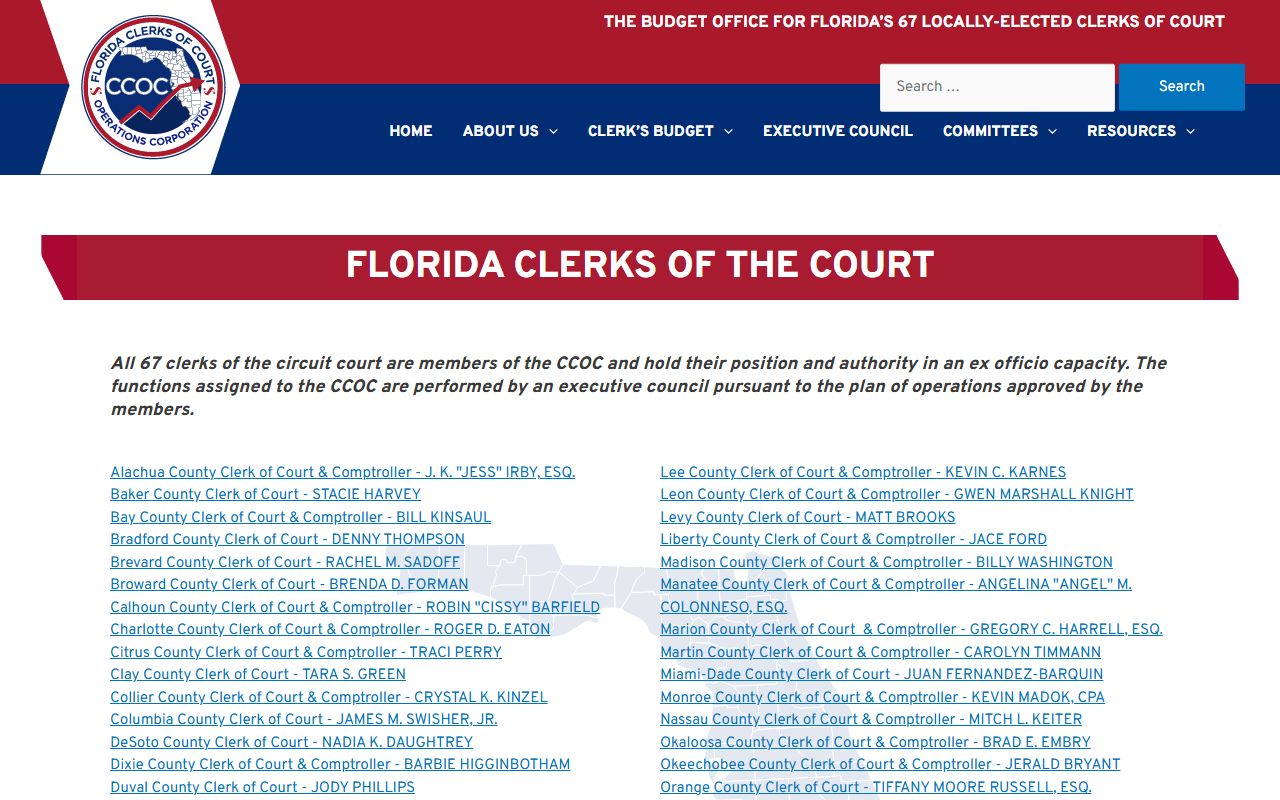
The FLCCOC site links to every county clerk office in Florida where traffic court records are stored.
Options After Getting a Florida Traffic Citation
You have 30 days from the date a traffic citation is issued to decide how to handle it. This deadline is firm. Missing it can lead to extra fines and a suspension of your driving privileges in Florida. Under Florida Statute Chapter 318, there are three main options for a payable traffic ticket. You can pay the fine and accept points. You can elect to attend a driver improvement course. Or you can plead not guilty and ask for a court hearing. Each choice affects your traffic court record differently in Florida.
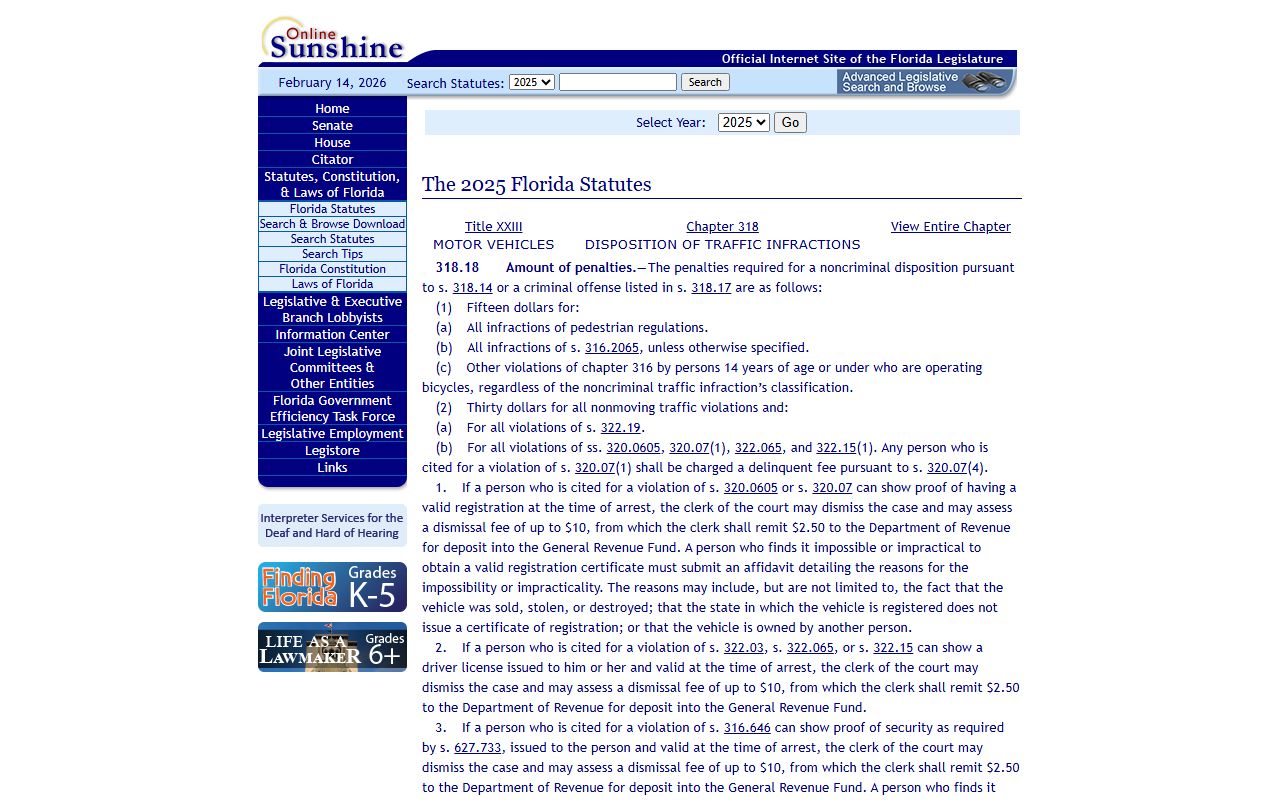
Chapter 318 of the Florida Statutes sets out the penalties and steps for handling traffic infractions.
Paying the citation is the simplest route. You admit guilt and pay the fine to the clerk of court. Points go on your driving record, and that may raise your insurance costs. The second option is driver improvement school. You pay the fine and enroll in an approved course. The court withholds adjudication, which means no points hit your record. This is popular but comes with limits. You can only elect it five times in your life and only once every twelve months. Commercial driver's license holders cannot use this option at all. The third choice is to plead not guilty within 30 days. The clerk sets a court date and you appear before a judge to fight the traffic citation in Florida.
Note: Payment of the civil penalty counts as a conviction on your Florida traffic court record, and points will be added to your driving history.
How to Search Traffic Court Records Online in Florida
Several online tools let you search Florida traffic court records from home. The fastest starting point is the county clerk's own website. Many Florida counties run online portals where you can look up a traffic case by citation number, name, or case number. Some charge a small fee. Others are free to search. Results show case status, charges, fines owed, and court dates. You can also use the Florida Courts E-Filing Portal to search and file documents in traffic cases statewide. County-specific systems like Alachua County's online traffic citation search and Broward County's case search portal offer direct access to local traffic court records in Florida.
For in-person searches, go to the clerk of court in the county where the citation was issued. Bring the citation number if you have it. Staff can look up your traffic court record and tell you the case status, fine amount, and next steps. Most clerk offices are open Monday through Friday during regular business hours. Some counties have extended phone hours for traffic court questions. The FLHSMV locations directory can help you find state offices, while each county clerk has its own courthouse where traffic court records are kept.
Use the FLHSMV locations directory to find state offices and service centers across Florida.
Traffic Court Records and Your Driving Record
Every traffic conviction in Florida adds points to your driving record. The FLHSMV tracks these points and can suspend your license if you get too many. Under Florida Statute Chapter 316, different violations carry different point values. Speeding tickets, running red lights, and reckless driving all have set point amounts. If you rack up 12 points in 12 months, your license gets a 30-day suspension. Eighteen points in 18 months means three months. Twenty-four points in 36 months leads to a full year suspension. These traffic court records follow you and can have lasting effects on your ability to drive in Florida.
The FLHSMV page on driver license suspensions explains how traffic court convictions affect your driving privileges in Florida.
Some traffic violations require a mandatory court appearance. Racing, reckless driving, and passing a school bus are on that list. These are more serious and can result in criminal charges on your traffic court record. Under Chapter 316, driving under the influence is a criminal traffic offense that may lead to jail time, steep fines, and a long license suspension in Florida. Criminal traffic court records stay on file and are visible through public records searches. You can reach the FLHSMV at 850-617-2000 for license reinstatement questions tied to traffic court cases.
Chapter 316, the Florida Uniform Traffic Control Law, covers every type of traffic violation that creates a court record in the state.
The Florida Department of Transportation also maintains traffic records data through its Traffic Records System. This system tracks crash data, roadway data, driver data, and citation adjudication data across the state. For law enforcement records tied to traffic stops, the Florida Department of Law Enforcement handles public records requests at 850-410-7676.
Public Access to Florida Traffic Court Records
Traffic court records in Florida are public. Florida Statute Chapter 119 says that all state, county, and municipal records are open for personal inspection and copying by any person. This covers traffic court case files held by the clerk of court. You do not need to be a party in the case. You do not need to give a reason. The law is clear on this.
Some limits exist. Under Florida Rule of Judicial Administration 2.420, the Florida Supreme Court decides what court records stay open and what gets sealed. For adult traffic cases, records are generally visible online, including the content of the actual court documents. But confidential information gets redacted from public traffic court records. This means social security numbers, bank account numbers, and details about victims in certain cases are blacked out. Under Administrative Order AOSC 15-18, clerks follow an Access Security Matrix that sets the level of electronic access to traffic court records in each Florida county.
Anyone can request copies. The clerk may charge per page for copies of traffic court records in Florida. Certified copies cost more than plain ones.
Unpaid Traffic Court Fines in Florida
If you do not pay your traffic court fine on time, the problems add up fast in Florida. Late fees get added to your balance. Your driver's license may be suspended. Under Florida Statute 28.246, any fines, fees, or costs that stay unpaid after 90 days get sent to a collection agency. The collection agency can add up to 40% on top of what you owe. That turns a small traffic ticket into a much bigger bill. This applies to traffic court records across all 67 Florida counties.
Handle your traffic citation within the 30-day window if you can. If you need more time, contact the clerk's office in your county before the deadline passes to ask about extensions or payment plans. Some Florida counties allow you to set up payment plans for traffic court fines that you cannot pay all at once.
Browse Florida Traffic Court Records by County
Each of Florida's 67 counties has its own Clerk of Court who keeps traffic court records. Pick a county below to find local contact info, search tools, and resources for traffic cases in that area.
Traffic Court Records in Major Florida Cities
Residents of major cities file traffic cases at their county clerk of court. Pick a city below to learn about traffic court records in that area.